

The humidity of the air in an apartment is an important element of the microclimate that affects the overall well-being of the residents, the quality of sleep, and the condition of interior materials. Many people only realize the problems with humidity when they feel discomfort. This article discusses scientifically grounded humidity standards, signs of deviations, and effective methods for their elimination, including the use of humidifiers and dehumidifiers.
This is reported by Rivne24
Humidity Standards for Residential Spaces
The comfortable level of relative humidity for residential spaces, according to the sanitary standards of many countries, is 40‒60%. This value is supported by numerous studies in the field of hygiene.
Optimal humidity levels for different rooms:
- Bedroom — 40‒55%; insufficient humidity can worsen sleep quality and dry out mucous membranes.
- Children’s room — 45‒60%; children are more sensitive to changes in humidity.
- Living room and home office — 40‒55%; a comfortable range for prolonged stays.
- Kitchen and bathroom — 50‒70%; these areas naturally have higher humidity due to cooking and water procedures.
These indicators refer to relative humidity — that is, the percentage of water vapor in the air. Measurements are taken using a hygrometer, which allows for real-time monitoring of the microclimate.
Signs of Low Humidity and the Need for a Humidifier
A decrease in humidity to below 40% is a common problem during the heating season. Central heating warms the air but does not enrich it with moisture, which can lead to a drop in humidity levels to 20‒25%.
Signs of dry air in the room include:
- Feeling of dryness in the nose, throat, and lips upon waking;
- Frequent eye irritation, especially in people who wear contact lenses;
- Static electricity on clothes and furniture;
- Cracking of parquet and wooden furniture;
- Houseplants require more frequent watering, and their leaves turn yellow.
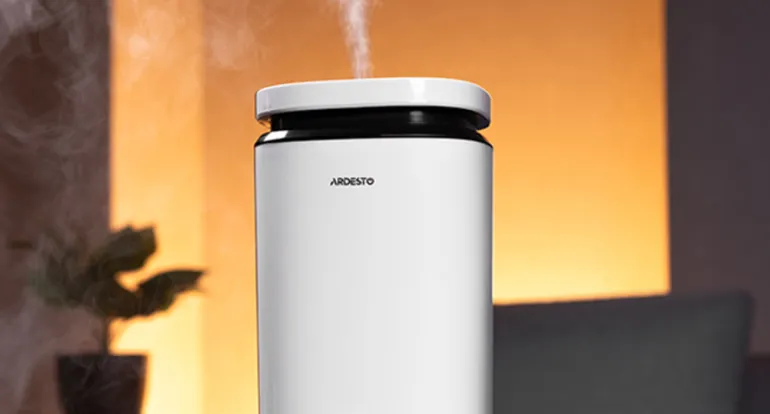
The most effective solution for increasing humidity is a humidifier. Ultrasonic models are more productive and quieter, while evaporative ones do not require distilled water and do not leave a white residue. The choice between them depends on water hardness and room size.
Experts note: maintaining humidity at 45‒50% in the bedroom reduces the concentration of viral particles in the air.
Symptoms of Excess Humidity and Methods for Reduction
Increased humidity exceeding 65‒70% creates conditions for the development of mold fungi and dust mites, which are serious allergens.
Signs of excessive humidity that can be noticed without special devices:
- Condensation on cold surfaces;
- Musty smell in rooms;
- Dark spots on tiles and walls;
- Peeling wallpaper and swelling laminate.
To combat excessive humidity, several methods are used. A dehumidifier is the quickest solution, along with regular ventilation and improving ventilation, especially in the kitchen and bathroom.
Tips for Maintaining a Stable Microclimate
Optimal humidity in an apartment changes depending on the season and heating mode. Systematic monitoring helps respond promptly to changes.
Steps to maintain a stable microclimate:
- Install a hygrometer in each room;
- During the heating season, use a humidifier set to 45‒50%;
- Check humidity in rooms with poor ventilation;
- Ventilate rooms after cooking or taking a shower.
A stable humidity level of 40‒60% is important not only for comfort but also for health and maintaining the condition of the apartment.