

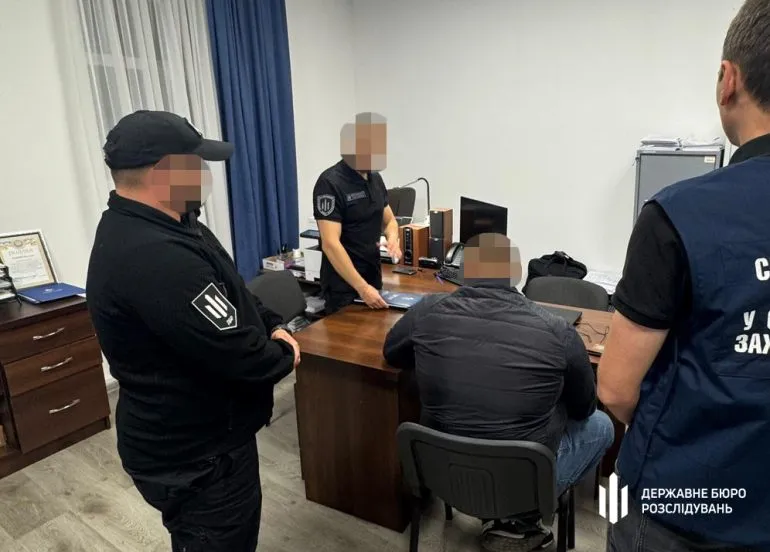
Employees of the State Bureau of Investigations have completed a pre-trial investigation concerning a military unit commander from Rivne Region who illegally involved his subordinates in the construction of his own cottage.
This is reported by Rivne24
According to the investigation materials, in March 2024, the commander began constructing a private house in the Lviv region. To save on hiring workers, he directed several servicemen to carry out construction work, even though they formally remained at their deployment location in Rivne and continued to receive their salaries.
The soldiers, who had worked in the construction sector before the full-scale invasion, were effectively engaged in renovating the commander’s house. If anyone refused to go to the site, the commander threatened to send them to the combat zone.
On September 17, 2025, during a search, the employees of the SBI found two soldiers directly at the construction site. One of the subordinates had independently gone to Sumy Region a month before the searches to carry out combat missions. The commander’s driver and the unit’s lawyer were also involved in organizing the work, purchasing materials, and addressing current issues.
As a result of these actions, the state incurred damages amounting to over 2.7 million UAH — this is the amount paid to the servicemen who did not fulfill their official duties.
During the pre-trial investigation, the commander admitted his guilt, compensated for the damages caused, and additionally transferred 500,000 UAH for the needs of the Armed Forces of Ukraine. He was dismissed from his position and transferred to another military unit.
The indictment has already been sent to court.
The former commander is accused of abusing his official position, which led to severe consequences (Part 2, Article 364 of the Criminal Code of Ukraine). This charge carries a penalty of imprisonment for a term of 3 to 6 years, with the possibility of a ban on holding certain positions for up to 3 years and the imposition of a fine.