

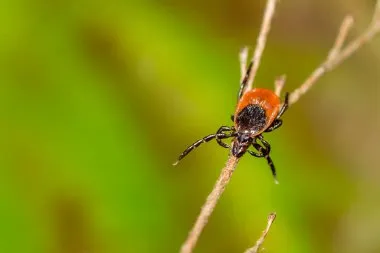
Ixodid ticks actively reproduce in the autumn period when the weather becomes cooler and more humid. This contributes to an increase in their population, as these arthropods reach maturity to transition to a new phase of development.
This is reported by Rivne24
According to long-term acarological monitoring, six species of ixodid ticks have been recorded in the Rivne region. Currently, their numbers vary from 2 to 14 per square kilometer in urban recreational areas, up to 17–24 in the Forest-Steppe, and 25–29 in the Polissya.
Experts predict that tick activity will further increase in October, and they will remain active until the air temperature drops to 0 °C.
Finding a tick on a person’s body can lead to infection with over 150 dangerous infectious diseases. It is important to note that ixodid tick-borne borreliosis (Lyme disease) is one of the main risks in the Rivne region.
The incidence rate in Rivne continues to rise. In the first eight months of 2025, it reached 9.77 per 100,000 population, which is 15.5% higher compared to the same period last year.
If a tick is found on the body, it is recommended to remove it urgently. It is best to consult a medical facility. If this is not possible, the tick can be removed by oneself, slowly wiggling it with tweezers or a loop of thread to avoid damaging its body and introducing potentially dangerous hemolymph into the wound.
The bite site should be treated with an antiseptic, and a consultation with an infectious disease specialist is advised regarding the necessity of antibiotic prophylaxis for Lyme borreliosis and further monitoring of health status.